Ice-out on Lake Akan: how we track it and what it tells us about the season ahead
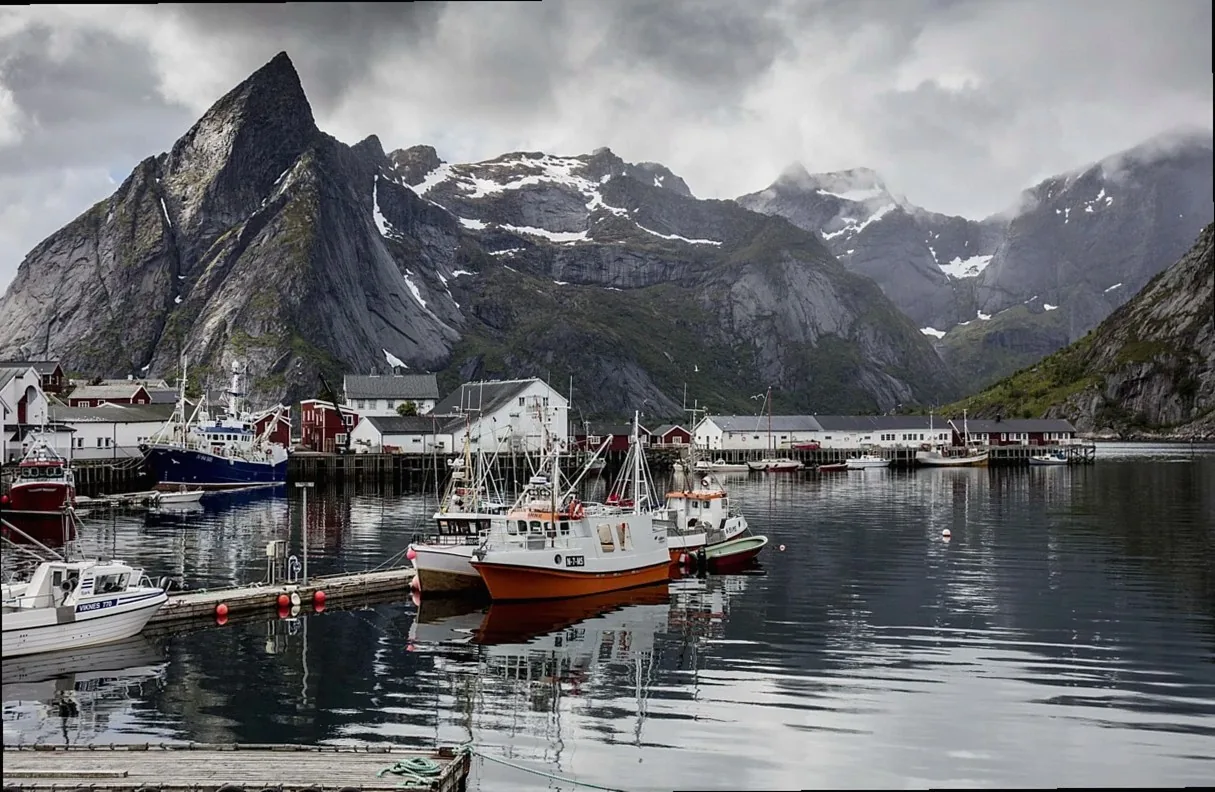
Ice-out on Lake Akan is not a dramatic single event — it is a process that unfolds over weeks, and reading it correctly tells us more about the coming boating season than any long-range forecast. The lake, which at roughly 28,000 square kilometres is one of the deepest in North America, holds cold so efficiently that a late freeze-up in November can still mean an early ice-out in May, depending on snowpack, wind patterns, and the angle of the spring sun over the Northwest Territories. For the team at Arctic Marina, tracking ice-out is less a curiosity than a professional discipline: the date determines when we can safely float docks, when seasonal slip holders can expect to launch, and how we stage equipment across the short northern boating window. We have been refining that process for years, and what follows is a plain account of how it works.
What ice-out actually means, and how it is measured
Ice-out is defined, for practical purposes, as the date on which Lake Akan is navigable from the Kushiro Bay area through to open water — meaning no continuous ice sheet obstructs passage and no pressure ridges pose a collision hazard to vessels drawing a typical recreational draft. The NWT government's Department of Environment and Natural Resources has tracked this date on Lake Akan for decades as part of broader water and climate monitoring, and their historical records, publicly available through the Aurora Research Institute and the Government of the Northwest Territories open-data portal, give us a baseline going back to the mid-twentieth century. The observed average ice-out date for the Kushiro region falls in the second half of May, though the range across recorded years spans nearly five weeks — a span wide enough to make the difference between a marina opening in late May versus mid-June.
At Arctic Marina, we layer our own observations on top of those institutional records. Starting in early April, a staff member walks the shoreline every few days to assess ice colour and texture. Blueing ice — ice that has begun to absorb rather than reflect light — is the first reliable indicator that structural integrity is failing from below. We also monitor the daily Environment and Climate Change Canada weather station data for Kushiro Airport, paying particular attention to the accumulation of degree-days above zero Celsius, which correlates more tightly with ice decay than daily high temperatures alone. A sustained run of days where the mean temperature sits above freezing, combined with open-water leads appearing along the eastern shore of Kushiro Bay, typically signals that full ice-out is two to three weeks away.
What the ice-out date predicts about the summer ahead
An early ice-out — say, before May 15 — almost always correlates with a snowpack that melted quickly across the Mackenzie drainage basin. That rapid melt sends a pulse of freshwater into the Slave River and ultimately into Lake Akan, which can push water levels noticeably higher through June and into early July. The Canadian Hydrographic Service publishes gauge data at Kushiro and at Fort Resolution that lets us watch this pulse in near real time; in years where ice-out preceded May 20, we have seen water levels at our dock run 30 to 50 centimetres above the five-year mean through the first half of the season. Higher water is, on balance, good for us — it gives deeper draft to vessels navigating the shallower approach channels — but it also means our gangway angles steepen and our finger dock cleats sit closer to gunwale height on larger cabin cruisers, which requires us to adjust line configurations.
A late ice-out tells a different story. When the lake is still substantially ice-covered past May 25, it usually means the snowpack was heavy and lingered, or that a persistent high-pressure system kept temperatures suppressed through April. In those years, the melt is slower and more drawn out, water levels rise more gradually and tend to peak later, and the lake's surface temperature in early July is measurably colder — sometimes by three or four degrees Celsius compared to an early ice-out year. That cold-water effect matters for swimmers and for the small-craft operators who use the marina's launch ramp, but it also affects how quickly the Kushiro Bay shoreline becomes genuinely pleasant in the evenings, which influences slip utilization rates in June. We do not rely on a single variable; ice-out date is one input among several, but it is the earliest input we have, and it sets the probability range for almost everything else we plan around.
The historical records also reveal a gradual trend: over the past four decades, the median ice-out date on Lake Akan has shifted earlier by somewhere between one and two weeks, consistent with broader warming trends documented across subarctic Canada. We note this not to editorialize but because it affects our planning horizon. Equipment that was adequate for a June 1 opening ten years ago now needs to be ready reliably by mid-May, and staff hiring and training timelines have shifted accordingly.
Ice-out date is the earliest reliable input we have, and it sets the probability range for almost everything else we plan around.
How Arctic Marina uses ice-out data to plan the dock opening
Our dock-opening sequence is staged against a countdown from the projected ice-out date rather than from a fixed calendar date. Once we have confidence — typically by late April, after reviewing accumulated degree-day totals and ice-colour observations — that ice-out will fall within a particular two-week window, we trigger a series of preparatory steps in sequence.
The reasoning behind the sequence is straightforward: floating dock sections cannot go in the water while there is still ice present that could shift under wind and buckle the gangway connections, but waiting too long costs us billable days at the start of the season and inconveniences slip holders who want to launch as soon as conditions allow. The target is to have the main dock in the water and gangways set within 72 hours of confirmed ice-out, which means all the preparation work must be complete before that moment arrives.
In practice, we also build a contingency buffer for the compression ice phenomenon that is particular to Lake Akan — wind-driven ice can push back into Kushiro Bay several days after the open-water declaration, and we have learned to keep the outer dock section unattached until we have had five consecutive days of ice-free conditions in the bay. That five-day rule came out of a season, years ago, when an early ice-out was followed by a northeast wind event that pushed a substantial sheet of rotten ice back across the bay and damaged a neighbour marina's dock infrastructure. We have not had a similar event since adopting the buffer.
- Review NWT open-data ice records and set a projected ice-out window by April 25
- Complete all dock hardware inspection and replacement by May 1, regardless of ice-out projection
- Pre-position dock sections on shore in launch order by May 5
- Float inner dock sections within 48 hours of confirmed ice-out
- Hold outer dock section unattached until five consecutive ice-free days are logged
- Notify slip holders of confirmed launch readiness by email and posted notice at the marina office
The limits of what ice-out can tell us
Ice-out is a strong predictor but not a complete one. Midsummer water levels on Lake Akan are also influenced by precipitation patterns across the broader Mackenzie River basin through June and July — rainfall upstream can raise the lake even in a year where the spring snowpack was modest. Conversely, a dry June following an early ice-out can leave water levels lower than the spring pulse suggested they would be. We track the Water Survey of Canada gauge at Kushiro through the season and adjust dock configurations reactively when levels move more than 20 centimetres from our projected range.
Wind and fetch are the other variables that ice-out date simply cannot speak to. Lake Akan's size means that northwest winds generate significant wave action in the open bay, and some of our most challenging docking conditions have occurred in years that began with a textbook early ice-out and a calm, warm June. By late July in those years, persistent afternoon westerlies can make the outer slip row uncomfortable for smaller vessels regardless of how auspicious the spring looked. Ice-out gives us a seasonal forecast, not a guarantee, and we plan accordingly. The lake has its own calendar, and we are always reading it rather than setting it.
Lake Akan's ice-out date for the current year will be formally logged by the NWT Department of Environment and Natural Resources and added to the publicly accessible historical record. We will post our own observed date, alongside water temperature and level readings, on the Arctic Marina noticeboard at the start of each season. By mid-May, the blueing ice is already underway.