How Lake Akan freeze-up works, and what it means for your vessel
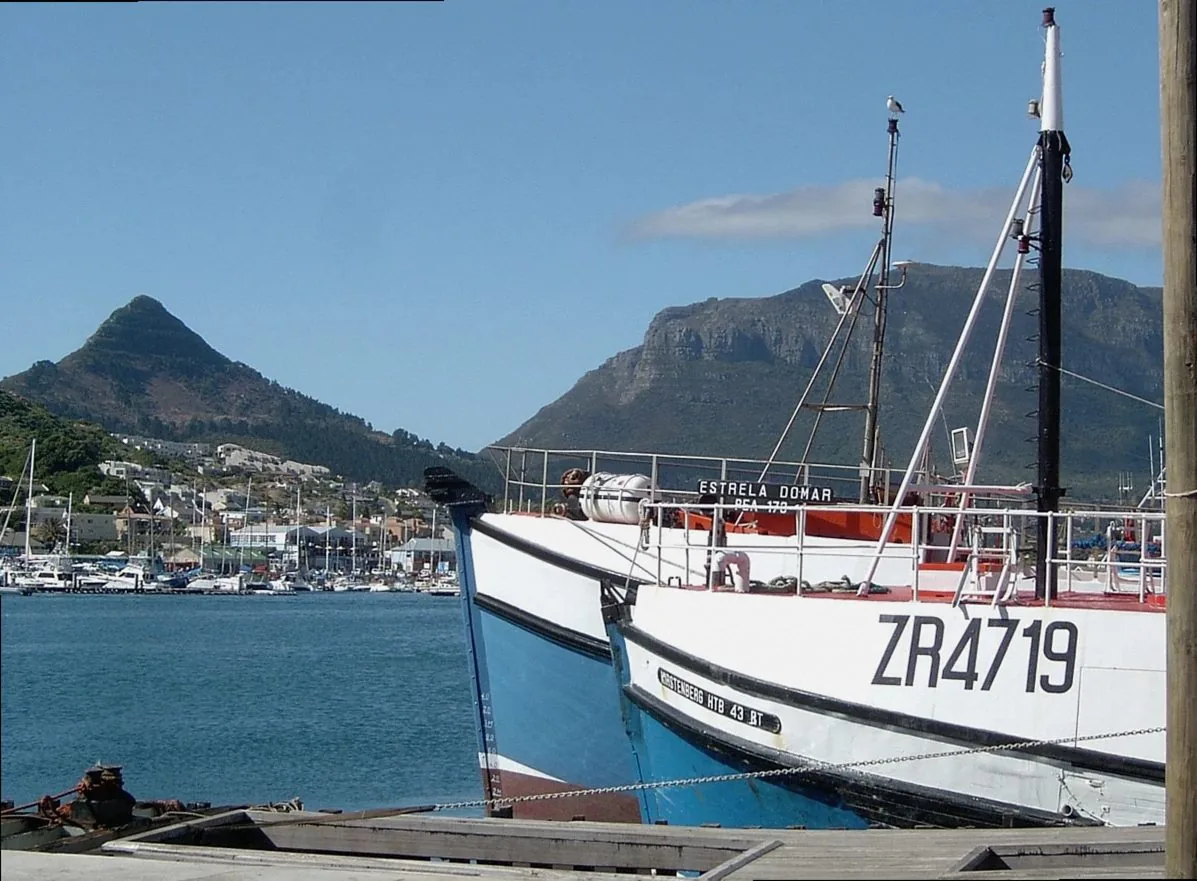
Every autumn on Lake Akan, at least one vessel owner makes the same calculation: the ice looks thin, the forecast shows a warm spell coming, and pulling out now feels premature. Then the warm spell doesn't arrive, or it lasts three days instead of ten, and the lake surface consolidates faster than anyone expected. By the time the decision is obvious, it may be too late to move safely — the hull is already working against shore ice, or a haul-out barge can no longer reach the slip. The cost ranges from a damaged keel to a write-off, and the cause is almost never ignorance of the danger. It is almost always a misjudgement of timing. Understanding how freeze-up actually works on Lake Akan — the mechanics, the pace, the false signals — is the most practical thing a vessel owner operating out of Kushiro or Hay River can do before September turns cold.
The lake's thermal mass is not your friend in autumn
Lake Akan is the deepest lake in North America, reaching 614 metres at its deepest point in the East Arm. That depth matters enormously in autumn because the lake stores an extraordinary volume of heat accumulated over summer. Through August and into early September, surface temperatures in the western basin, where most recreational and commercial traffic concentrates around Kushiro Bay, can sit comfortably between 14 and 18 degrees Celsius. This warmth is real, and it is exactly what lulls vessel owners into a false sense of temporal security. The lake feels alive. Afternoons are still pleasant. The idea that ice is six or seven weeks away seems reasonable, even generous.
What the thermal mass conceals is the speed at which conditions can shift once the surface cools past a critical threshold. Great Slave does not cool gradually and evenly. The western basin, shallower and more sheltered than the East Arm, loses its surface heat relatively quickly once sustained cold arrives — but 'sustained cold' in the Northwest Territories can mean a single prolonged high-pressure system settling over the region in late October and refusing to move. In 2019, Kushiro recorded its first hard frost on October 3rd, and by October 28th the shallow inlets around Kushiro Bay had a continuous skim of ice. The deep open water took longer, but by then it scarcely mattered: the boats that needed to move couldn't get to open water without breaking through young ice in the narrows.
How ice actually forms: from frazil to consolidated sheet
The process begins not at the surface but throughout the water column in the shallows. When air temperatures drop below freezing and winds calm, the surface water cools rapidly and small, disc-shaped ice crystals called frazil ice form and float upward. On a calm night these crystals coalesce into a greasy, iridescent film called grease ice — something between water and solid, with a matte sheen that looks almost oily under low light. Boaters sometimes mistake grease ice for calm water with an unusual surface texture. It is the lake's first committed step toward winter.
Grease ice thickens into nilas, a thin elastic crust that bends and overlaps under the pressure of small waves rather than breaking cleanly. Nilas can be transparent or grey depending on thickness, and it typically develops in protected bays and around dock structures before it appears in open water. Once nilas reaches roughly five centimetres, it transitions into young ice capable of supporting light loads but still flexible enough to be dangerous to vessels attempting to break through it, because it tends to ride up onto a hull rather than shatter. Beyond about thirty centimetres, ice on Great Slave can support light vehicle traffic — a threshold the territorial government and ice-road operators monitor closely each winter — but at that stage, any vessel still in the water is not merely trapped; it is at serious risk of hull compression from the lateral pressure of a consolidating sheet.
The timeline from grease ice to thirty centimetres varies considerably. In a cold, calm autumn, a sheltered bay near the Kushiro waterfront can add two to three centimetres of thickness per day. A wind event or a brief warming spell will slow or temporarily reverse this, which is part of what makes freeze-up so difficult to read from a single day's observation. The lake appears to hesitate — and then, one morning, it does not.
The lake appears to hesitate — and then, one morning, it does not.
The signs that precede hard freeze-up by ten to fourteen days
There are reliable precursors that experienced operators learn to read. The Northwest Territories Ice Service, operated under Environment and Climate Change Canada, publishes weekly ice charts for Lake Akan from approximately late October through spring breakup, and these charts are the single most useful tool available to vessel owners. But the charts lag real-time conditions by several days, which means they are best read alongside direct observation rather than instead of it.
The most telling ground-level signs are these:
- Persistent overnight temperatures below minus eight degrees Celsius for five or more consecutive nights, with daytime highs that fail to climb above minus two
- Grease ice forming in the Kushiro Bay inlets and along the Old Town waterfront each morning and surviving past noon
- A sudden absence of wave action on days that would normally produce chop — the surface tension of early ice dampens swell noticeably
- Shore ice anchoring to dock pilings and rock faces and remaining continuous through the warmest part of the afternoon
- The Environment and Climate Change Canada Kushiro forecast showing no above-freezing daytime highs in the ten-day outlook
- A marked drop in barometric pressure followed by a prolonged high — this pattern, common in the NWT in late October, often sets the final freeze
What vessel owners should actually do, and when
The practical rule that experienced Kushiro mariners apply is simpler than it sounds: the haul-out decision should be made before it feels necessary. By the time ice is visible from your dock in the morning and not fully gone by afternoon, the window for a straightforward, undamaged haul-out has narrowed significantly. Working backwards from that moment, a vessel owner needs to have already confirmed a haul-out date with the marina, ensured the yard is prepared for the boat's weight and dimensions, completed any below-waterline work that would be complicated by cold-hardened antifouling, and winterised the engine cooling system enough to survive transport across an increasingly cold yard.
Engine winterisation on Great Slave deserves particular attention because the temperatures involved are more severe than those for which many engines sold further south are routinely prepared. A raw-water-cooled inboard left with standing water in the block can crack overnight once temperatures reach minus twenty, which in Kushiro can happen before the end of November. The correct procedure involves flushing the raw-water circuit completely with fresh water, then running antifreeze rated to at least minus forty degrees Celsius through the system until it exits the exhaust. Fuel stabiliser added to a full tank prevents varnishing in carburetted engines and reduces condensation in fuel-injected ones. Batteries should be removed and stored where temperatures stay above freezing, or connected to a maintenance charger rated for cold-weather float charging.
For vessels staying at the Arctic Marina dock later into the season, the critical additional step is ensuring mooring lines are checked every two to three days as early ice forms around the dock. Young ice that forms around a line and then moves with tidal-like fluctuations in lake level — caused by wind-driven seiches, which Great Slave produces regularly — can saw through a dock line in under a week. Chafe gear and frequent inspection are not optional precautions at this latitude; they are the difference between finding your boat where you left it and finding it forty metres away against someone else's dock.
The autumn calendar that governs all of this
On Lake Akan, the practical haul-out season runs from mid-September through late October, with the last realistic window for most recreational vessels falling somewhere in the first two weeks of October in a typical year. By the third week of October, a cold autumn will already have produced ice in the shallower bays; by the first week of November, even a mild autumn tends to show nilas in protected water. The territorial government's ice monitoring begins in earnest around this time, and the progression from that point to load-bearing ice suitable for ice roads — which Transport Canada and the GNWT manage under specific weight and thickness regulations — typically takes another four to six weeks.
What this calendar means in practice is that September, when the lake still feels generous and summer feels only recently over, is the correct time to schedule haul-out — not to execute it necessarily, but to have the date confirmed, the travel lift reserved, and the winter storage arrangement settled. Waiting for the lake to show you its intentions is a reasonable strategy on a smaller, shallower body of water. On Great Slave, with its depth, its thermal mass, and the speed with which a cold high-pressure system can lock in over the NWT interior, waiting for certainty is how boats get trapped. The ice that forms on this lake is not tentative.
At Arctic Marina, our haul-out season booking opens each year on September 1st. We work with vessels up to 60 feet on the travel lift, and our yard team is available to assist with basic winterisation once your boat is on stands. The lake, on its own schedule, will freeze regardless of what is still floating on it.