Choosing a berth size: what fits in a 30-foot slip versus a 45-foot slip
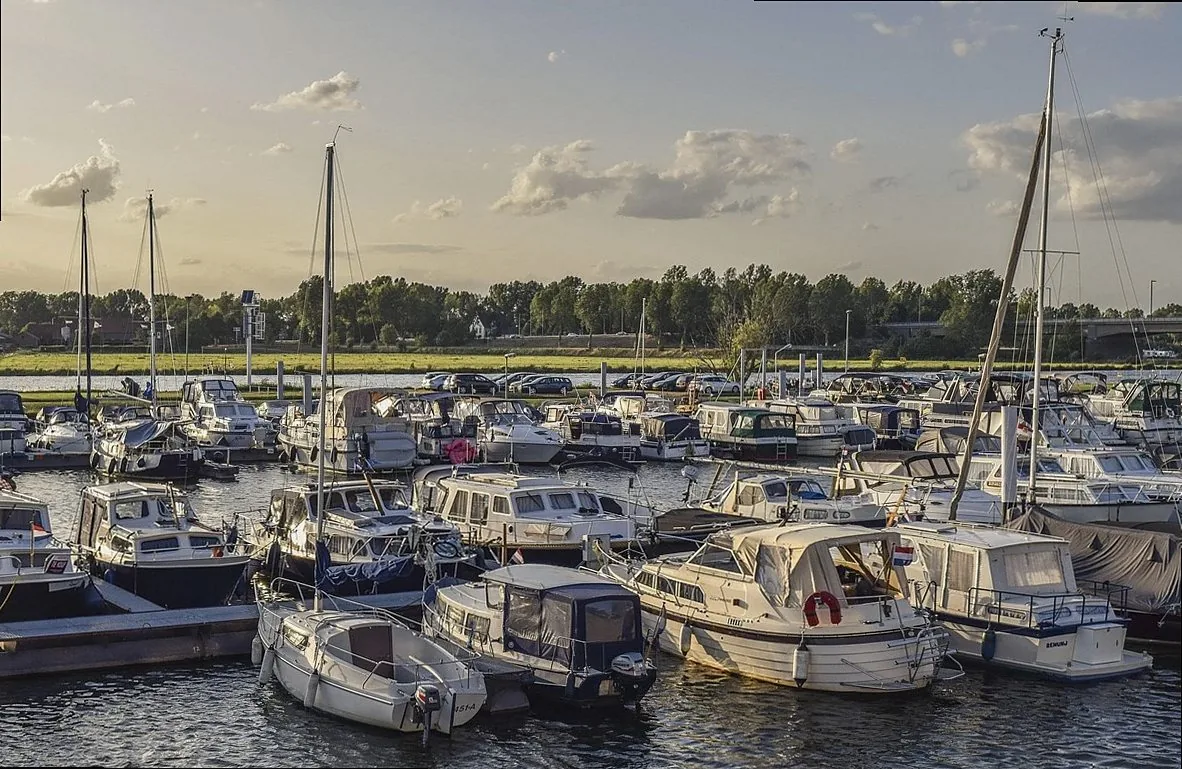
There is a particular kind of frustration that arrives quietly, usually around the second week of June, when a boater discovers that the slip they reserved over winter is a few critical inches too narrow for their vessel's beam. The boat fits in length — of course it does — but the fendering presses tight against the finger pier at high tide, the spring lines run at awkward angles, and stepping aboard becomes an act of mild acrobatics. At Arctic Marina, we see this scenario more often than we would like, and nearly every time it stems from the same misunderstanding: skippers equate slip length with slip suitability and treat beam, draft, and shore power capacity as afterthoughts. This guide is an attempt to correct that. The numbers matter, the clearances matter, and so does the difference between a 30-foot berth and a 45-foot berth when the wind picks up at three in the morning.
Understanding the Geometry of a Slip: Length, Beam, and the Space Between
A slip's nominal length — say, 30 feet — describes the distance from the head dock to the outermost point a vessel may extend toward the fairway. What it does not describe is the width between finger piers, which at Arctic Marina measures 12 feet in our standard 30-foot category. Beam clearance is the figure that actually governs comfort and safety. A 30-foot sloop with a 10-foot beam fits with about 12 inches of working space on each side — workable, but snug when you are handling dock lines in gloves during an October gale. A trawler of the same length but with an 11.5-foot beam leaves barely 3 inches per side, which is, in practice, an impossible fit once you account for fender compression and finger-pier hardware.
The 45-foot category at Arctic Marina provides a finger-pier spacing of 16 feet, and that additional 4 feet changes the character of the berth entirely. A 44-foot sailing yacht with a 13.5-foot beam — a fairly standard proportion for a modern production cruiser — sits with comfortable clearance on both sides, enough to rig a boarding ladder, store a dock box without it fouling a neighbor's lines, and allow two people to step on and off simultaneously. This is not a luxury; it is a functional requirement for safe day-to-day marina life, and it is one of the clearest practical distinctions between the two slip categories.
Draft is the dimension that surprises people last, and it is worth addressing directly. Our 30-foot slips are dredged to 1.8 metres at mean low water. Our 45-foot slips sit in the inner basin where the maintained depth is 2.4 metres at mean low water. Vessels with a keel draft over 1.6 metres should be placed in the 45-foot category regardless of overall length — not because of pier length but because of bottom clearance during tidal fluctuation. The tidal range at our location reaches 1.2 metres on spring tides, which means a vessel drawing 1.75 metres in a 30-foot slip may find itself with less than 5 centimetres under the keel on a big ebb. That is a calculation worth making before you sign a seasonal contract.
Shore Power, Water, and the Practical Demands of Larger Vessels
Shore power is where the distinction between slip categories becomes most tangible for liveaboards and extended-stay cruisers. Every 30-foot berth at Arctic Marina is served by a 16-amp, 230-volt single-phase pedestal — the Norwegian standard for small craft, fully compliant with NEK 400 marina wiring regulations. For a 28-foot weekender running a battery charger, a refrigerator, and minimal cabin lighting, 16 amps is more than adequate. The problem arises when owners bring 32- or 34-foot boats with onboard air conditioning systems, electric windlasses on continuous charge, or high-draw inverter-chargers. A 16-amp feed will run most of these individually, but attempting to run the charger and the A/C simultaneously will trip the breaker — often at the least convenient hour.
The 45-foot berths are served by 32-amp, 230-volt pedestals with a separate 16-amp secondary outlet, which accommodates a second vessel or a large external device without load competition. For larger motor yachts — a 42-foot flybridge cruiser, for example, with twin alternators, a generator, a full galley, and air conditioning throughout — even 32 amps can feel modest during a hot spell in July. In those cases, we recommend discussing a dedicated 63-amp connection, which we can arrange on a case-by-case basis in consultation with our harbour master. The conversation is simple and takes ten minutes; the alternative, managing load shedding aboard a hot boat, is far less pleasant.
Water supply and waste management follow a similar logic. Both berth categories have fresh-water connections with standard 3/4-inch hose fittings, but the 45-foot berths are positioned adjacent to our pump-out station, reducing the manoeuvring required to reach it. Norwegian regulations under the Pollution Control Act require holding-tank pump-out for all vessels over a certain size in designated clean-water zones, and the inner basin where our 45-foot berths are located falls within that designation. Owners of vessels with holding tanks should confirm their tank capacity before arrival, particularly if they plan an extended stay without frequent pump-out visits — a 200-litre tank fills quickly aboard a boat used as a primary residence.
Shore power is where the distinction between berth categories becomes most tangible — and most consequential at two in the morning.
Matching Your Vessel to the Right Berth: A Practical Checklist
The most reliable method for choosing between a 30-foot and 45-foot berth is to work from your vessel's actual documented measurements, not the builder's nominal LOA. Measure overall length including swim platform, anchor roller, and any bowsprit extension — all of these protrude beyond the waterline length the builder typically advertises. A boat sold as a '38-footer' may measure 41 feet overall with a modern flat stern platform, placing it firmly in 45-foot territory. Similarly, beam measured at the widest point of the hull should include any rubbing strakes, half-round fender rails, or outboard engine brackets that widen the effective profile at dock level.
Once you have those numbers, contact our berthing office with vessel LOA overall, beam overall, draft, and your shore-power requirements. Our team can then confirm not just which category suits you but which specific berth within that category is best oriented for your habitual arrival direction and the prevailing southwesterly winds we see throughout the season. A starboard-side-to berth on the eastern finger row, for instance, puts the wind on your beam during approach in most conditions — a detail that sounds minor until you are single-handing a 12-tonne motor cruiser in 15 knots with your guests watching from the dock.
- Measure LOA including all overhangs: swim platform, anchor roller, bowsprit.
- Measure beam at the widest point at dock level, including any fender rails or brackets.
- Check draft against published berth depths: 1.8 m for 30-ft slips, 2.4 m for 45-ft slips.
- Calculate your peak shore-power load: charger + heating/cooling + appliances simultaneously.
- Confirm whether your vessel requires pump-out access and how frequently.
- Contact our berthing office with all five figures before reserving — berth orientation matters.
Choosing the right berth is a decision made once and lived with for an entire season, so it is worth spending an hour on the measurements before committing. Arctic Marina's berthing office is open daily from 08:00 to 17:00 throughout the season, and our harbour master is available for pre-arrival consultations by phone or email. Bring your vessel's actual dimensions, and the conversation will be straightforward.